Is Traverse City Worth Visiting In October?
October is Traverse City's busiest and arguably best month: harvest is finishing, tasting rooms peak, and fall colour lingers on the peninsulas. Here is what to expect and what to book ahead.
Is Traverse City Worth Visiting In October?
Yes, October is arguably the best month to visit Traverse City, and also the busiest. Harvest finishes mid-to-late through the month, tasting rooms hit their annual peak, and the federal per diem for lodging drops to $134 a night from July and August's $235. Book early.
That last sentence is the honest caveat, and it is worth dwelling on. October is the one month when everything this region is known for happens at once: the grape harvest runs mid-to-late September through October, fall colour rolls down the peninsulas, and the tasting rooms that were quiet in June have waiting lists. The crowds are not a reason to skip October. They are a reason to plan it differently from a summer trip.
The value case is real. The U.S. General Services Administration sets a per diem lodging rate for Traverse City of $134 a night for most months of fiscal 2026, rising to $235 for July and August. The federal government budgets 75 percent more for a Traverse City room in high summer than in October. You are not getting a bargain, exactly, but you are getting shoulder-season rates in the month the region is at its most interesting.
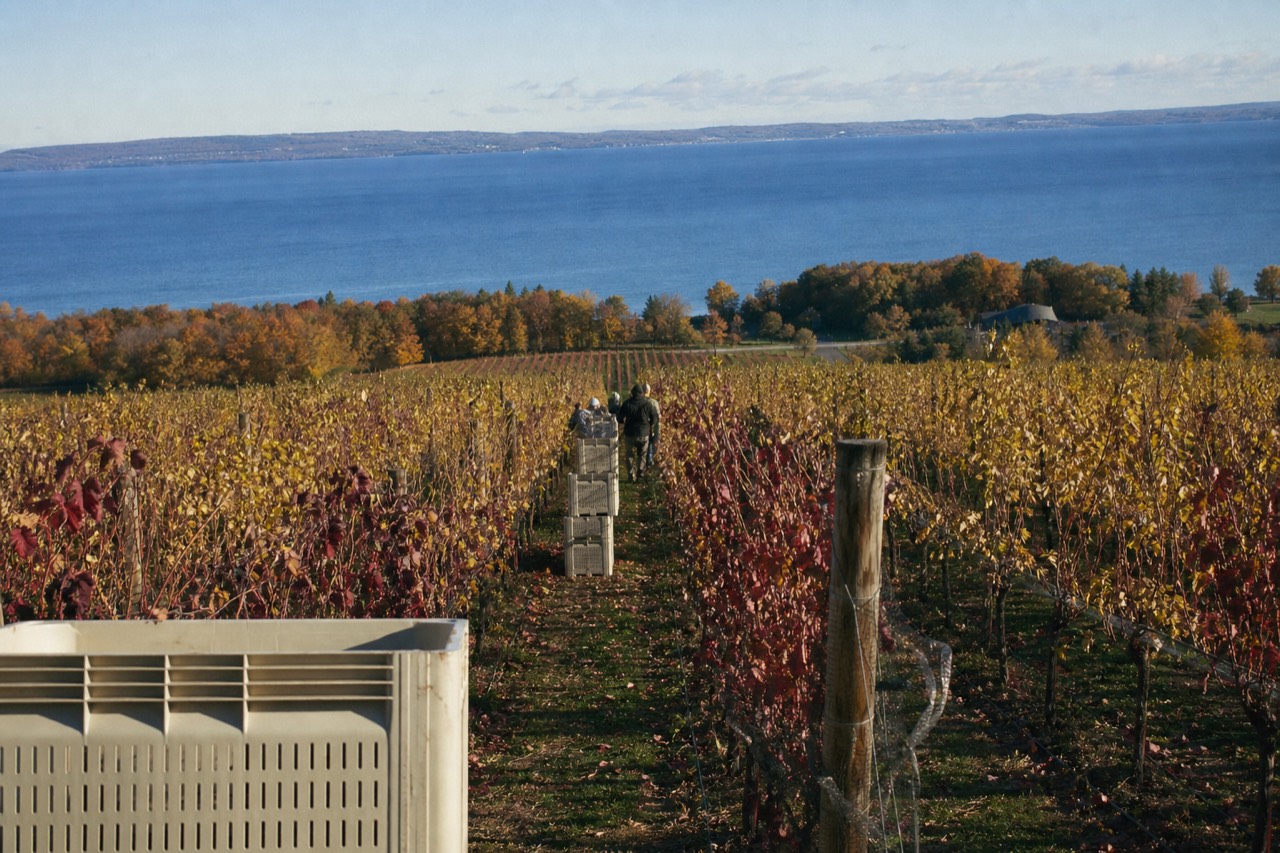
There is a third reason October works that has nothing to do with price. The two American Viticultural Areas that flank Grand Traverse Bay, Old Mission Peninsula and Leelanau Peninsula, together produce over 60 percent of Michigan's grapes, and October is the month the whole apparatus of that industry is visible: trucks on Center Road, bins at crush pads, crews in the rows. In July a vineyard is scenery. In October it is a workplace you can watch, and that difference changes the character of every stop.
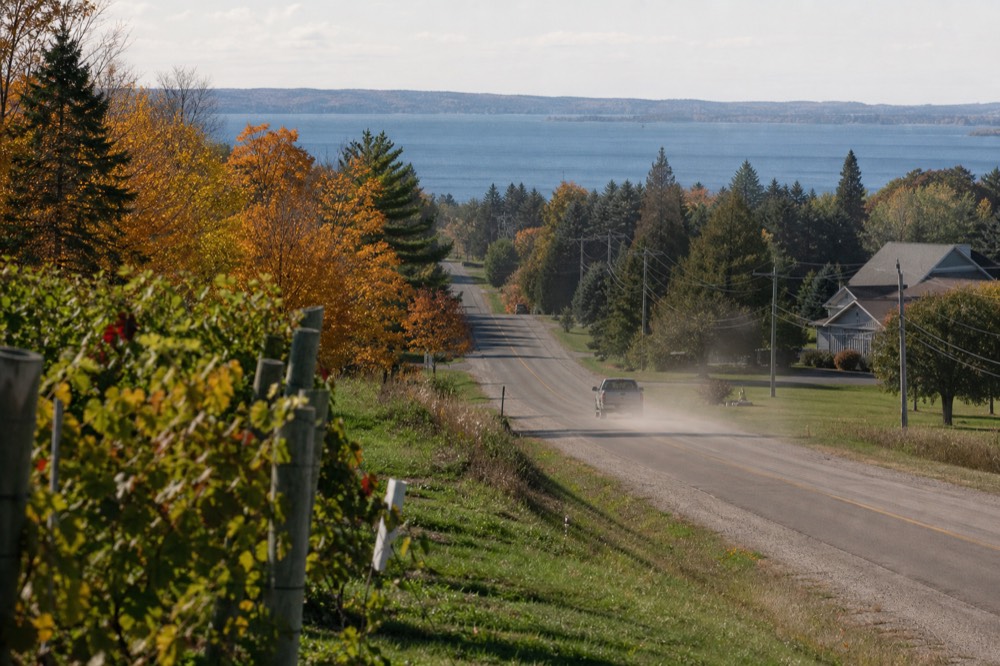
If wine is the point of the trip, the format matters as much as the month. These three October-ready tours cover the range:
What Does October Actually Look Like In Traverse City?
Expect daytime highs that invite a jacket, colour that peaks early to mid month inland, and peninsulas that hold their leaves later than anywhere else in the region because the bay moderates the air. There is no officially verified peak-colour date, and any page promising one is guessing.
Traverse City Tourism's own colour-tour guidance says peak colour in the Grand Traverse region typically arrives between early and mid October, with air off Lake Michigan keeping the peninsulas insulated so their colour often lingers to the end of the month. That is a window, not a promise, and the site says so itself. The 2026 forecasts from national outlets disagreed with each other by more than a week, which tells you how much precision is honestly available.
The bay-moderation point is worth understanding because it explains the whole trip. The same lake effect that lets wine grapes ripen this far north also slows the first hard frosts on the peninsulas, so the vines and the maples around them stay photogenic after inland areas have gone bare. A week that looks finished in Kalkaska can still be prime on Old Mission. This is also why the region can grow wine grapes at the 45th parallel at all: Traverse City sits halfway between the equator and the North Pole, in the same latitude band as parts of Bordeaux and Piedmont, and the lake does the rest.
Day-to-day, October here is a layering month. Mornings can start near freezing, afternoons can reach the sixties in the first half of the month, and rain arrives in spells rather than all-day soakers. The wind off the bay is the constant. Anyone standing on a tasting-room deck at 5 p.m. in late October will understand why locals judge October outfits by the coat, not the sweater.
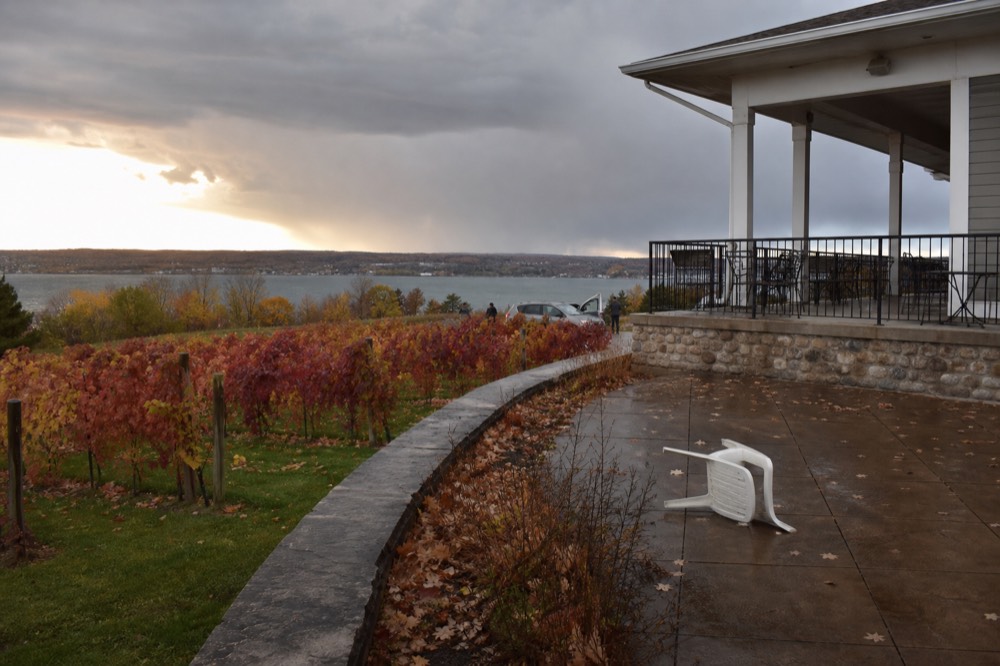
Practically: pack layers, expect rain on some days, and plan indoor stops, tasting rooms, a distillery, a downtown lunch, as the backup rather than the afterthought. The fall colour driving routes around the region are built around exactly this variability, and they pair naturally with a touring day on either peninsula.
Is October Too Busy At The Wineries?
Yes, October is the busiest month of the year in Traverse City tasting rooms, and it is not close. Harvest and fall colour overlap, appointments fill first, and the shared shuttle tours that run all summer can sell out days ahead. The fix is booking, not avoidance.
The verified industry picture backs this up. Michigan wineries draw more than 1.7 million tasting-room visitors a year statewide, and the Traverse City region, which produces over 60 percent of Michigan's grapes across its two AVAs, takes a disproportionate share of that in the fall. Harvest runs mid-to-late September through October, with sparkling base fruit picked first, then whites and reds, and Riesling latest. You may literally watch fruit come off the vine at midday.
Crowding is also format-dependent. A shared shuttle that caps at 14 or 20 people feels busy in October because it is busy. A private or semi-private option costs more but buys you a fixed itinerary in a month when walk-in tasting rooms are least likely to accommodate one. Our guide to the best time of year for wine tasting breaks the whole season down if your dates are flexible.
It helps to understand what "busy" means at a specific winery. A tasting room that seats forty at its bar can absorb a Saturday afternoon crowd in June without anyone waiting. That same room in mid October may run a wait list by 2 p.m., and a group of eight arriving without an appointment can simply be turned away, not out of rudeness but arithmetic. The Old Mission Peninsula is no more than three miles wide at any point and runs about nineteen miles north from town, so there is a limited number of rooms within a reasonable drive of each other, and they all fill on the same weekends.
How Does October Unfold Week By Week?
Early October is the sweet spot, mid month is peak everything, late October is quieter with colour still on the peninsulas, and the last weekend can tip toward November conditions. The week you choose changes the trip more than the year you visit.
This table is a planning frame built from the harvest calendar and the colour guidance above, not a forecast. Treat the crowd column as directional and check the live listings for the specific week you are going.
| October window | Harvest stage | Colour | Crowd level |
|---|---|---|---|
| First week | Sparkling base fruit largely picked, whites starting | Peaking inland, building on the peninsulas | High, rooms and Saturday tours tighten |
| Second week | Whites and early reds coming off | Typically the regional peak window | Peak, the busiest tasting days of the year |
| Third week | Reds and later varieties, Riesling last | Inland fading, peninsulas holding | High but easing after weekends |
| Fourth week | Harvest finishing, crush winding down | Late colour on both peninsulas | Moderate, the best late-month value |
The first week is the connoisseur's pick if you can swing it. Harvest is already running, the colour inland is peaking, and the tasting rooms have not yet reached their absolute ceiling. The second week is the one to book furthest ahead: it combines the typical colour peak with the thinnest availability. The third week is the sleeper, because most leaf-season travelers plan around the second, leaving the third noticeably easier while the peninsulas are often still at their best. The fourth week is a different trip entirely, quieter, cooler, with harvest winding down and the region exhaling.
One more October wrinkle worth knowing: the Leelanau Peninsula Wine Trail's Toast the Season event runs over the first two November weekends, with small pours, food pairings and cork cash at participating wineries, so late October is when the peninsula pivots toward its winter programming. The trail's events page is the place to watch if your trip straddles the month boundary.
What Should You Book Ahead, And How Far?
Book wine tours, weekend lodging and any winery-inn room first, roughly two to six weeks out for tours and earlier for October weekends. Tasting-room appointments, restaurant tables on Saturday and anything on the peninsulas in the second week of October all need advance planning.
The hierarchy is simple. Anything with a fixed seat count, a shuttle seat, a private vehicle, an inn room, sells in a defined order. Anything walk-in, a tasting-room bar seat, a downtown lunch table on a Tuesday, mostly does not. October stress comes almost entirely from treating the second category like the first.
| What | Book ahead? | How far | Why |
|---|---|---|---|
| Shared wine tour | Yes | 2 to 6 weeks | Fixed capacity, October is the annual peak |
| Private or semi-private tour | Yes | 3 to 6 weeks | Fewer departures, groups compete for them |
| Winery inn rooms | Yes | 2 to 4 months | Small properties, leaf season overlaps harvest |
| Downtown hotel | Yes for weekends | 3 to 6 weeks | Weekdays are far easier than Saturdays |
| Tasting-room appointments | Recommended | 1 to 2 weeks | Especially mid month and for named flights |
| Restaurants | Saturday only | 1 to 2 weeks | Weeknights are usually walk-in friendly |
A note on the winery inns, because they are the scarcest October inventory of all. The Inn at Black Star Farms and Chateau Chantal are small properties in high demand in any month, and October compounds that. If an inn stay is the centrepiece of your trip, book the room first and build the itinerary around it, not the other way round. The guide to where to stay in Traverse City covers the options across downtown, the bayfront and the peninsulas.
The Leelanau five-hour tour is a good example of why the booking advice matters. It visits three estates in the Leelanau Peninsula AVA, the older of the two regions bordering Grand Traverse Bay, with appointments arranged ahead at each stop, which is exactly the structure you want in peak month. It runs from $79 per person with tasting fees paid at the wineries.
If the budget is the constraint rather than the calendar, the wine country on a budget guide covers the fee-inclusion differences between operators, which matter more in October when every stop is full and you cannot simply drift to the next room. The short version: some operators include samples in the fare and some do not, and in a month when you cannot improvise, knowing which is which before you pay is worth real money.
A practical way to sequence all of this: lock the inn room or downtown weekend hotel first, then the tour, then the tasting appointments, and leave restaurant reservations for last. Tasting-room appointments are the most flexible piece of the puzzle, since many wineries hold afternoon slots until a few days ahead, but the named flights and seated experiences at the better-known estates go earlier. If you are traveling in the second week of October, treat every appointment on the peninsulas as a book-ahead item regardless of what the table above says about weekdays.
One more thing worth checking before you pay for any tour: the pickup point. Most shared tours depart from downtown Traverse City hotels, and a few add peninsula pickups, which can save a long drive at the start of the day if you are staying out that way. Confirm the pickup window when you book, because October traffic on the peninsula roads adds time to every departure, and operators run on tighter margins between stops in peak month than they do in summer.
October Versus September And November: Which Is Better?
September gives you harvest energy with fewer crowds and greener vines, October gives you colour, peak activity and peak competition, and November gives you quiet rooms, bare vines and the first winter events at lower prices. Most wine-first visitors should still pick October, but the other two months are not consolation prizes.
September is the insider's month. Harvest is already running, the weather is warmer, and the tasting rooms are noticeably easier to walk into. What you trade away is the colour and some of the atmosphere: the vineyards are still largely green, and the region feels like late summer rather than autumn. For travelers whose priority is tasting rather than looking, that trade can be worth making.
November is the value month. The vines are bare, but the rooms are cheaper, the bars are uncrowded, and the trails run their winter programming, Toast the Season into mid November, ice wine events later on. The winter wine tasting guide covers that season properly, including the snowshoe-and-tasting formats that only exist once the snow arrives.
| September | October | November | |
|---|---|---|---|
| Vines | Green, harvest beginning | Colour, harvest finishing | Bare, dormancy |
| Tasting-room crowds | Moderate | Peak of the year | Low |
| Lodging cost signal | Shoulder | Shoulder, weekends tight | Low season |
| Best for | Warm-weather touring | Colour plus harvest | Value and quiet |
Is A Sunset Wine Tour Still Worth It In October?
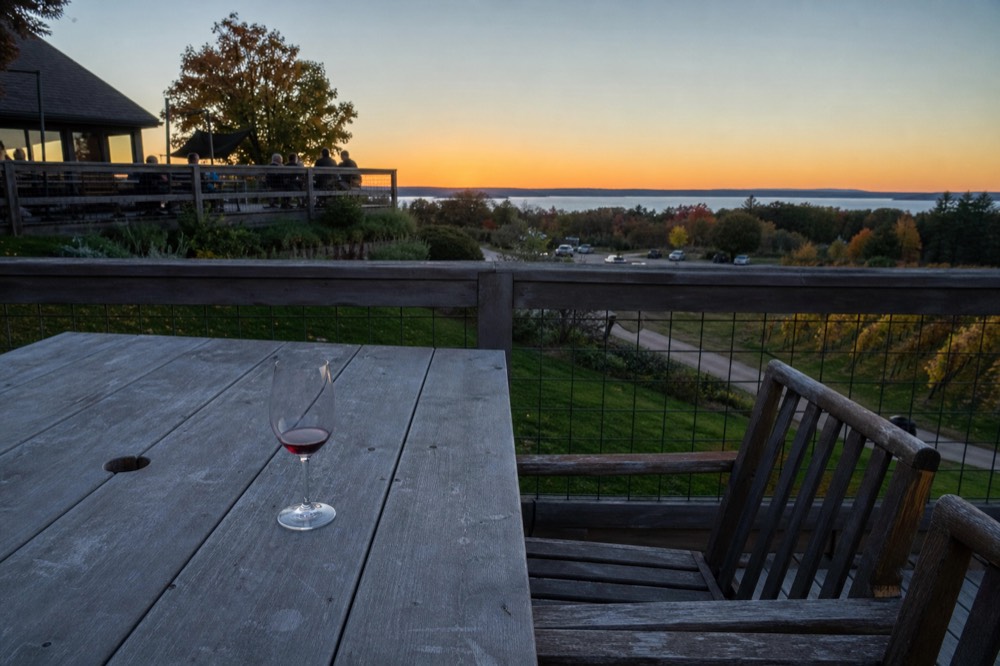
Yes, and it is arguably better than in summer. October sunsets come earlier in the evening, so a four-hour tour that ends at dusk finishes at a civilised hour, and the low autumn light across the bay is the region's best photography window. Bring a coat, because the lake air cools fast after the sun drops.
Sunset timing is the quiet advantage of an October evening tour. In July a sunset run means finishing near 10 p.m.; in October the same route wraps up hours earlier, which matters if you have dinner plans downtown or an early flight out of Cherry Capital, which has been setting passenger records and broke ground in April 2026 on a $120 million terminal expansion targeted for 2028.
The Old Mission sunset tour is the natural fit here: three wineries, four hours, from $74 per person, run by The Magic Shuttle Bus with tasting fees of about $5 to $10 per stop paid at the bar. It carries a 4.9 rating across 261 reviews.
For a fuller rundown of the evening format across both peninsulas, see the sunset wine tours guide. And if you are pairing the trip with a stay rather than a day of touring, the Traverse City area took the top two spots among U.S. wine country hotels in the USA Today 10Best Readers' Choice Awards for 2025, with the Inn at Black Star Farms first and Chateau Chantal second, both bookable months ahead for October.
Whatever you choose, book the touring day before you book anything else. October in Traverse City rewards the organized and punishes the spontaneous, and that is the one sentence to carry into planning. Traverse City Wine Tours exists to make that part easier.
October in Traverse City comes down to one trade: the best month for colour, harvest and atmosphere is also the month that punishes late planning. Book the tour and the room first, aim for the first or third week if you can, and the busiest month of the year becomes the best one. These are the questions travelers ask most.
Common Questions About Visiting Traverse City In October
Is Traverse City Worth Visiting In October?
Yes. Harvest finishes through October, tasting rooms are at their annual peak, and the peninsulas hold fall colour later than inland Michigan. The trade-off is crowds and the need to book tours and lodging ahead, especially for the second week of the month.
When does fall colour peak in Traverse City?
Traverse City Tourism's guidance puts typical peak colour between early and mid October, with the peninsulas holding colour to the end of the month because the bay moderates the air. No official peak date range exists, and forecasts from different outlets disagree.
Is October too crowded for wine tasting?
October is the busiest month of the year in the tasting rooms, but crowds are manageable if you book a tour with appointments arranged ahead and avoid assuming walk-in seating mid month. Weekdays are far easier than October weekends.
Are hotels cheaper in October than in summer?
Generally yes. The federal per diem lodging rate for Traverse City is $134 a night in October versus $235 in July and August, a useful seasonality signal even for leisure travelers. October weekends still tighten, so book those early.
Is harvest still happening in October?
Yes. Harvest runs mid-to-late September through October, with sparkling base fruit picked first, then whites and reds, and Riesling latest. Ice wine is the exception: those grapes stay on the vine and are picked frozen from late December into January.