What City Is Known For Cherries? Traverse City Owns That Title
Traverse City is the city known for cherries, and here is the evidence: the orchards, the 100-year-old festival, the lake-effect geography, and the cherry wine and cider that grow out of it.

What City Is Known For Cherries?
The city known for cherries is Traverse City, Michigan, and the evidence is unusually concrete: its airport is literally named Cherry Capital, its National Cherry Festival has run since 1926 and marked its 100th anniversary in July 2026, and the surrounding Grand Traverse region is the heart of American tart cherry growing. The name is not a marketing invention. It is a description of what grows on the hills around the bay, and of what the town has celebrated for a century.
The 2026 festival ran 4 to 11 July and was the event's hundredth edition, the festival dating to 1926, with the 2027 dates already set for 3 to 10 July. That is a remarkable run for a small northern city, and it is the single clearest proof of the title: nobody holds a hundred years of cherry festivals by accident.
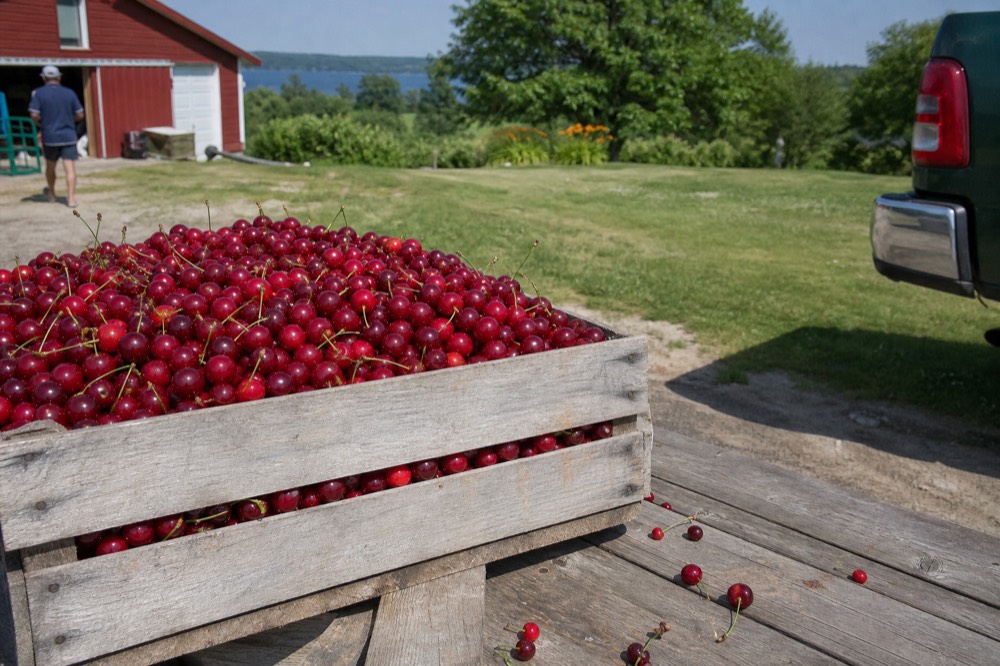
The airport seals it. Cherry Capital Airport handled 935,816 passengers in 2025, a third consecutive record year and up about 19 percent on 2024, per the Traverse City Record-Eagle. A city does not name its airport after a fruit it is casually associated with. It names it after the crop that built the region.
But this site is a wine site, and the cherry story and the wine story turn out to be the same story. The same lake-effect climate that lets Riesling ripen on the Old Mission and Leelanau peninsulas is what makes the cherry belt work, and the orchards and the vineyards sit side by side on the same glacial hills. If you are planning a trip around one, you will meet the other.
If the fruit side of the region appeals more than the grape side, or you want both, these are the three tours that fit an orchard-country visit best:
Why Cherries Grow Here: The Same Geography As The Wine
Traverse City sits on the 45th parallel between two arms of Grand Traverse Bay, and the water moderates the air on both sides: warm enough in fall to extend the growing season, cold enough in winter to let hardy fruit rest. That is the same mechanism Traverse City Tourism credits for the region's wine grapes, and it is why the tart cherry belt and the two wine peninsulas overlap almost exactly on the map.
The bay is the engine. Water holds heat longer than land, so in autumn the air coming off Grand Traverse Bay keeps the peninsulas warmer than the interior, stretching the season long enough for grapes and stone fruit to finish ripening. In spring, the same water slows the warm-up, which is a mixed blessing: it protects buds from early warmth, but when a late freeze does arrive, as it did in late April 2026, the damage can be severe.
The proof of how real the climate link is came in the 2026 crop numbers. The USDA forecast Michigan's 2026 tart cherry crop at 83.1 million pounds, down 26.9 million pounds on the previous season and the smallest in six years, after late-April freeze events damaged buds in some orchards, per the USDA Economic Research Service Fruit and Tree Nuts Outlook. A freeze that hurts cherries is the same kind of freeze that worries grape growers, and in 2026 the northern vineyards came through better than the orchards did.
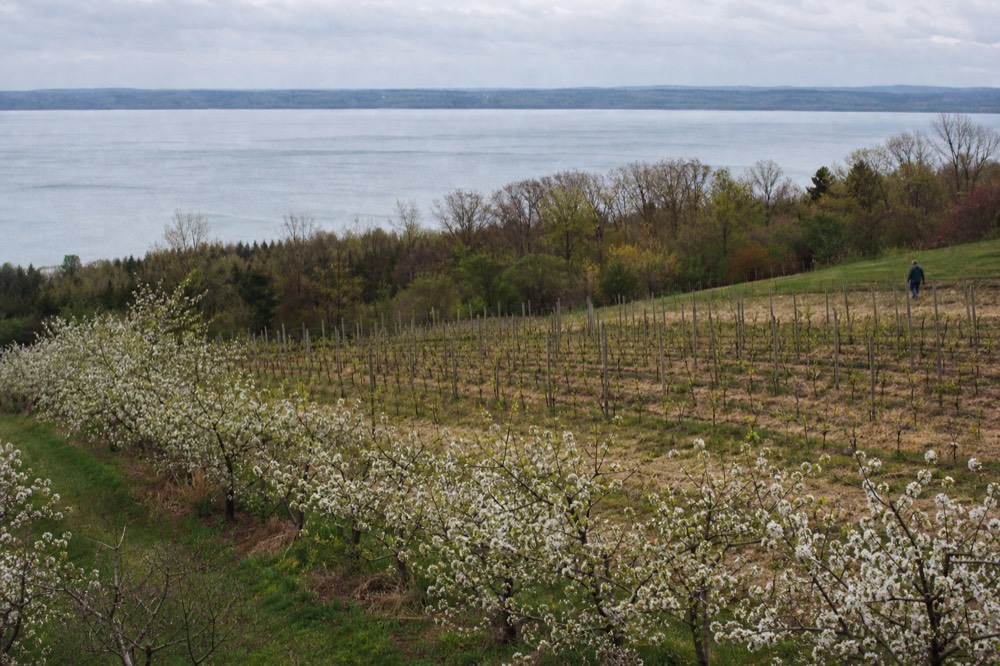
This is why a cherry article belongs on a wine site at all. The region's own tourism body describes the Traverse Wine Coast as defined by its two American Viticultural Areas, the Leelanau Peninsula AVA established in March 1982 and the Old Mission Peninsula AVA established in June 1987, which together produce over 60 percent of Michigan's grapes. The cherry orchards sit inside and around those same boundaries, on the same glacial soils, washed by the same lake air. One industry's terroir is the other's orchard site.
Visitors often notice the overlap before anyone explains it. Driving the Old Mission Peninsula, you pass a winery, then a cherry stand, then another winery. The two crops share the peninsula because they share the reason to be there. The peninsula runs roughly 19 miles north from town and is never more than three miles wide, so the bay is never far from either an orchard row or a vineyard row, and the mixing of the two landscapes is simply what the drive looks like.
For a fuller picture of how the two wine regions compare, including why Leelanau is the larger and older of the two, see our Old Mission versus Leelanau comparison. The cherry belt spans both, but the character of the drives and the tasting rooms differs between them.
A Hundred Years Of The National Cherry Festival
The National Cherry Festival is Traverse City's signature event, a week-long summer celebration of the cherry harvest that drew its founding in 1926 and celebrated its centenary in 2026, with the 2027 edition set for 3 to 10 July. It is the largest cherry-specific festival in the country and the reason millions of people associate this city with the fruit at all.
The festival's own media kit and FAQ, published at cherryfestival.org, confirm the dates and the centenary. A hundred consecutive years of anything is notable; a hundred years of a harvest festival tied to a single fruit, in a town of this size, is close to unique in American food culture.
The festival sits at the heart of the region's summer season, which is also peak wine-touring season. If you are timing a visit, our guide to the best time for wine tasting walks through how the festival week, the harvest calendar and the tasting-room crowds interact, because they very much do.
One honest note on the fruit itself: the 2026 festival ran in the same year the USDA forecast the smallest Michigan tart cherry crop in six years. The festival celebrates the industry regardless of any single season's yield, but visitors should not arrive expecting to buy record volumes of fresh local cherries in a short-crop year. The stands, the pies and the wine will be there either way.
It is also worth knowing what the festival week means for the wine country specifically. July is high summer, so the tasting rooms are busy but not at their October peak, and the tours that run daily in shoulder months often sell out around festival week simply because the whole town is full. Booking ahead in early July is not paranoia; it is arithmetic.
The Cherry Calendar, Month By Month
Cherry country runs on an annual rhythm: blossom in May, harvest in July and August, processed fruit and wine through fall, and ice-cold storage and cider through winter, and knowing where the month sits in that cycle tells you what the region will look and taste like when you visit. The festival marks the harvest peak, not the beginning of anything.
Here is the year as the orchards live it:
| Month | What is happening in cherry country | What a visitor sees |
|---|---|---|
| April | Bud break; the month when a late freeze can take the crop, as in April 2026 | Bare orchards, anxious growers |
| May | Blossom season across the peninsulas | White and pink bloom rows, quiet tasting rooms |
| June | Green fruit sets; early summer tourism builds | Small hard cherries, first warm-weather tours |
| July | Tart cherry harvest; the National Cherry Festival, 3 to 10 July in 2027 | Harvest equipment, festival crowds, fresh cherries |
| August | Late harvest winds down; sweet cherry season ends | Farm stands at their fullest |
| September | Processing and pressing; grape harvest begins | Orchard-to-winery transition, the busiest tasting rooms |
| October | Peak fall colour and peak tasting-room season | Full peninsulas, book tours ahead |
| November to March | Cider, cherry wine and winter events; ice wine picked frozen late December into January | Quiet rooms, snow, winter tasting programmes |
The overlap in September and October is the region's secret weapon. Cherry processing, grape harvest and fall colour all land in the same six weeks, which is why October is the busiest month in the tasting rooms and why the peninsulas hold their colour later than inland Michigan, as Traverse City Tourism's own colour-tour guidance notes. Our piece on Traverse City in October covers that window in detail.
The winter end of the calendar deserves a mention too. Ice wine is genuinely made here, with grapes left on the vine and picked frozen, typically late December into January, and the cider houses keep pouring through the snow. Travellers who assume wine country closes after October miss the quietest and in some ways the most distinctive season of the year.
Cherry Wine: The Fruit-Wine Tradition Nobody Else Has
Cherry wine is a genuine northern Michigan tradition rather than a tourist novelty, and in 2026 it won at the state's top competition: Bel Lago's NV Cherry Wine took Gold in the fruit wine category at the Taste Michigan Governor's Cup, standing on the same results sheet as the region's best Rieslings. That medal matters because it puts fruit wine on equal footing with the grape wines the region is known for.
The 2026 Governor's Cup, whose official results were released by the Michigan Wine Collaborative, crowned French Valley Vineyard's 2024 Dessert Riesling as Best of Show, and Bel Lago, on the Leelanau Peninsula, took the fruit-wine Gold with its cherry wine, per MLive's coverage of the results. A cherry wine medalling at the state level is the clearest possible signal that the orchard and the winery are one industry here.
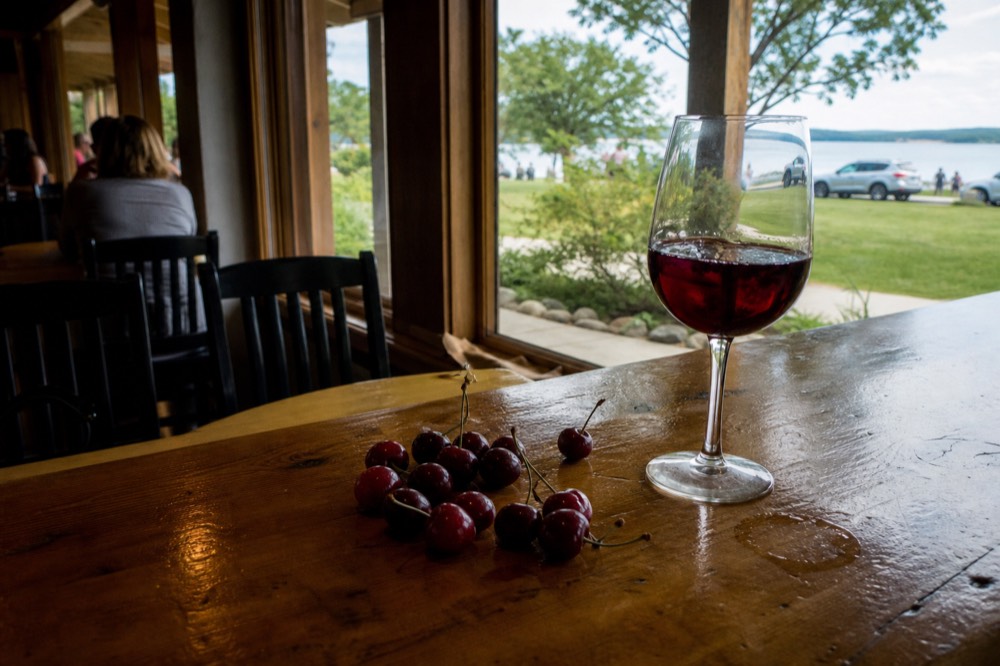
Fruit wine fills a real gap in cool-climate wine country. Riesling and Chardonnay ripen reliably on these peninsulas, but the orchards were here first, and the tart cherry, too sour to eat fresh out of hand for most people, is a natural fermentation feedstock. Northern Michigan producers have worked that angle for decades, and the best of them treat cherry wine as a serious product rather than a gift-shop joke.
For a visitor, the practical advice is simple: taste it where it is made. Cherry wine appears on Leelanau tasting-room lists more often than on Old Mission ones, simply because more Leelanau producers work with fruit alongside grapes. Bel Lago is the name to look for given the 2026 Gold, but several other Leelanau members pour fruit wines, and the category rewards curiosity. If you want a structured way to taste the region, the Leelanau Peninsula wine trail guide maps the member wineries.
Cider Houses: The Drinkable End Of Orchard Country
Hard cider is the most direct way to taste the orchards in a glass, and Traverse City's cider houses and breweries now form a touring circuit of their own, with apples and cherries both going into the fermenter alongside the region's grape wines. The same operators who run the wine tours run the cider and brewery routes, because the demand is the same: visitors want to taste what grows here, in every form it takes.
The distinction between the drink categories is worth a table, because visitors routinely conflate them:
| Drink | Made from | Where it fits on a Traverse City visit |
|---|---|---|
| Tart cherry wine | Fermented cherry juice, usually Leelanau fruit | Tasting-room pours; Bel Lago's won Gold at the 2026 Governor's Cup |
| Hard cider | Apples, sometimes blended with cherries | Dedicated cider houses and brewery taprooms around the city |
| Fruit-infused beer | Beer with cherry or apple additions | Breweries; Traverse City has a deep craft-brewing scene |
| Grape wine | Vinifera and hybrid grapes on the two peninsulas | The core of the region's wine trails |
The cider and brewery circuit is real enough that it has its own tour products. The Hard Cider & Beer Tour from Movie Stars Wine Tours runs four and a half hours through cider houses and breweries around Traverse City, from $199 per person; it is a new listing with no reviews published yet, so there is no rating to report. Samples are included with the ticket, food and take-home bottles are not.
If your group is split between wine people and cider people, the mixing option exists too. The Traverse City Wine and Beer Tour, also from Movie Stars Wine Tours, runs four and a half hours from $199 per person and combines winery stops with brewery ones, with pickup included. It is likewise a new listing carrying no reviews yet.
For a deeper dive into the beer side of the region, our Traverse City breweries guide covers the taprooms, including the closures and reopenings that stale lists miss. And if you are weighing a full wine-plus-cider-plus-beer day, the wine and beer day guide explains how the mixed-format tours actually run.
Earning The Title, Not Just Claiming It
Traverse City's cherry identity rests on four load-bearing facts: a century-old festival, an airport named for the fruit, a national-scale tart cherry industry in the surrounding counties, and award-winning cherry wine and cider flowing from the same orchards. Remove any one and the city would still plausibly claim the title; together they make the claim close to unarguable.
Other places grow cherries. Washington State produces enormous volumes of sweet cherries, and Door County, Wisconsin has its own cherry tradition. But no other city ties the fruit into its identity this completely, from the name on the airport to the wine on the tasting-room list. Traverse City is the answer to the question because the question is practically written into the map of the place.
The wine connection is what makes it worth a wine traveller's attention. You can stand at a Leelanau tasting room, drink a Gold-medal cherry wine, look out the window at cherry trees, and be a ten-minute drive from a vineyard that produced a Best of Show Riesling. Very few wine regions in the country can offer that sentence.
This is also why Traverse City Wine Tours covers the cider and brewery side of the region alongside the vineyards: in orchard country, the two are not separate products, they are the same landscape poured two different ways. A visit that only touches one of them is half a visit.
If that combination appeals, the tours below cover the cider-and-beer end of orchard country, the distillery route, and the tour that pairs wineries with downtown food stops:
Traverse City, Michigan is the city known for cherries, and the questions below cover the practical details visitors ask most: when the fruit is in season, what the festival dates are, whether the 2026 freeze mattered, and how to taste the orchards by glass. Each answer sticks to sourced figures, from the USDA crop forecast to the 2026 Governor's Cup results.
Common Questions About Traverse City And Cherries
What City Is Known For Cherries?
Traverse City, Michigan. It is the home of the National Cherry Festival, which marked its 100th anniversary in July 2026, its airport is named Cherry Capital, and the surrounding Grand Traverse region is the heart of American tart cherry growing.
Why is Traverse City called the Cherry Capital?
Because the tart cherry industry is built into the region's identity: the orchards grow on the same lake-moderated peninsulas as the vineyards, the National Cherry Festival has run since 1926, and even the airport carries the name. The title describes a real industry, not a slogan.
When is cherry season in Traverse City?
Tart cherry harvest runs in July, with the National Cherry Festival timed to it; the 2027 festival runs 3 to 10 July. Sweet cherries follow into August, and blossom season draws visitors in May.
Can you drink cherry wine in Traverse City?
Yes. Several Leelanau Peninsula producers make fruit wine, and Bel Lago's NV Cherry Wine took Gold in the fruit wine category at the 2026 Taste Michigan Governor's Cup Competition, so the category is taken seriously here.
Did the 2026 freeze affect the cherry crop?
Yes. The USDA forecast Michigan's 2026 tart cherry crop at 83.1 million pounds, down 26.9 million pounds on the previous season and the smallest in six years, after late-April freeze events damaged buds in some orchards.
Is there a tour that covers cider instead of wine?
Yes. The Hard Cider & Beer Tour from Movie Stars Wine Tours runs four and a half hours through cider houses and breweries around Traverse City, from $199 per person, with samples included in the ticket.