Where Can I Find Walking Wine Trails In Michigan?
The honest answer to whether Michigan has walkable wine trails, why the Traverse City peninsulas defeat the idea on geography, and the real alternatives that exist in town and by bike.
Where Can I Find Walking Wine Trails In Michigan?
Michigan has no true walking wine trail in the Napa-Valley-stroll sense, and Traverse City, the state's wine capital, certainly does not. The two peninsulas holding the region's wineries run roughly 19 miles and a full county respectively, with tasting rooms scattered along highway corridors miles apart. Instead, you get a small walkable cluster in downtown Traverse City, a paved in-town trail network, and a bike-plus-support-vehicle tour on Old Mission.
That answer will disappoint anyone who has walked the Urban Wine Trail in other wine regions and hoped for the same here. It is still the truthful one, and pretending otherwise would send you out on foot along Center Road with a highway shoulder for company. The wineries of Old Mission Peninsula sit along a single north-south spine that runs about 19 miles from Traverse City to the lighthouse at Old Mission Point, and the peninsula is never more than three miles wide, which sounds compact until you realize the tasting rooms are strung along that spine with real gaps between them.
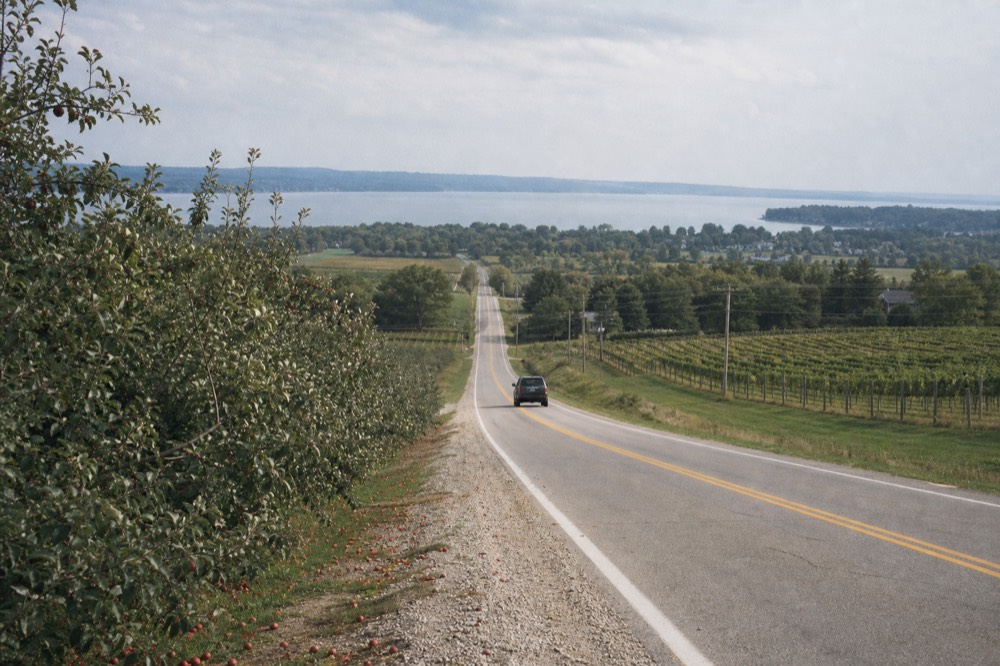
Leelanau Peninsula is a different order of problem. Its wine trail lists 23 member wineries, and the AVA boundary is the whole of Leelanau County excluding the offshore islands, which is to say the wineries are spread across an entire county of small towns, orchards and two-lane roads. A walking trail there is not an unbuilt idea; it is a geographic impossibility. No operator in the region sells one, and any page telling you otherwise is describing something that does not exist.
If your heart is set on covering wine country under your own power, or at least starting on foot, these are the three products that come closest to that idea in reality.
Why The Peninsulas Defeat A Walking Wine Trail
Old Mission Peninsula is a 19-mile finger of land no more than three miles wide, with ten trail wineries distributed along its single spine road, and Leelanau's 23 trail wineries are spread across an entire county. Walkable wine districts need density, and neither peninsula has it. The tasting rooms here are destinations you drive to, not doors you pass on a sidewalk.
The comparison people reach for is a city wine district, where half a dozen tasting rooms sit within a few blocks. Traverse City's wine country grew the opposite way: farms needed land, vines needed slopes near the water, and the result is estates set well back from each other along rural roads. The Old Mission Peninsula Wine Trail's own trail map, which lists its ten wineries, is built for drivers and cyclists, not pedestrians. You can see the shape of the problem on any good wine country map of the region: two long peninsulas, thin corridors, water on both sides.
There is also a legal and safety layer worth naming. Michigan's open-container law, MCL 257.624a, bans open alcohol in the passenger area of a vehicle, with an exception for passengers in a chartered vehicle authorized by the state transportation department. Nothing in that structure rewards walking between stops on a highway shoulder, and everything in it rewards either a chartered shuttle or staying put at one winery. The roads themselves carry real traffic in season, when tasting rooms are busiest in October.
So when a search result promises a "walking wine tour of Traverse City," read it carefully. What is usually being sold is a walking tour of downtown Traverse City with a single wine stop, or a shuttle tour with a short walk at each estate. Those can be fine products. They are not walking wine trails, and knowing the difference saves you a booking you did not actually want.
What Is Genuinely Walkable: Downtown Traverse City
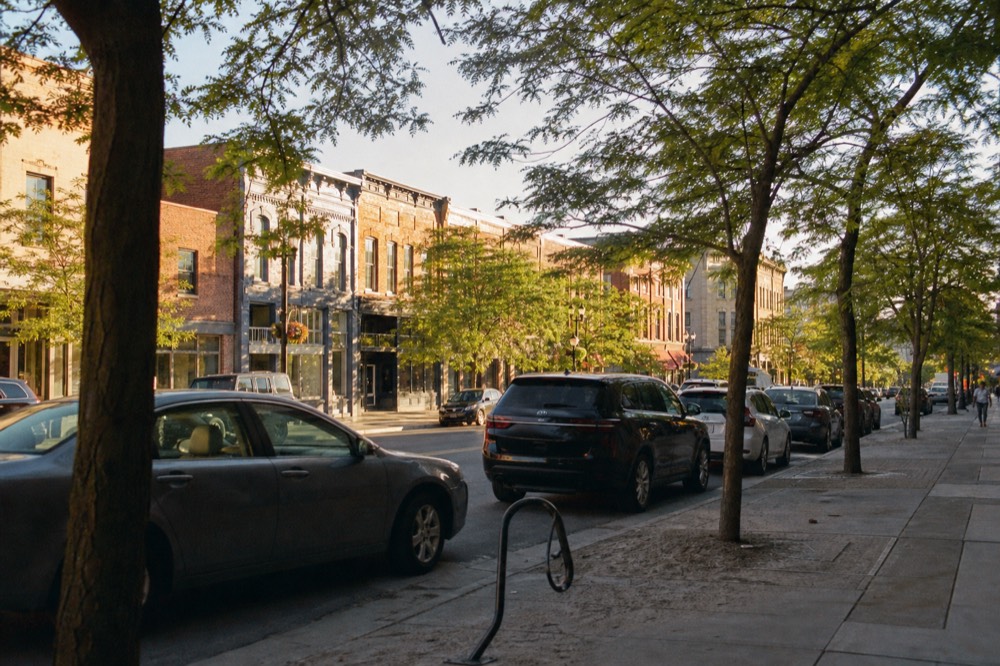
The one genuinely walkable wine experience in the region is the cluster around downtown Traverse City, anchored by Left Foot Charley, the urban winery inside the city. From there, the downtown core, the waterfront and the TART trail network are all reachable on foot. It is a small scene, an afternoon rather than a weekend, but it is real.
Left Foot Charley makes its wine in town, in a converted building at the old state hospital grounds just off the downtown core, which makes it the closest thing the region has to an urban tasting room you can walk to, through and from. The rest of downtown Traverse City is a compact, walkable grid of restaurants, tasting options and shops, and the city has been building its food reputation hard: it was named Food City of the Year in Midwest Living's Best of the Midwest Awards for 2026, and placed sixth for Best Small Town Food Scene in the USA Today 10Best Readers' Choice Awards for 2026, per the Detroit Free Press's reporting.
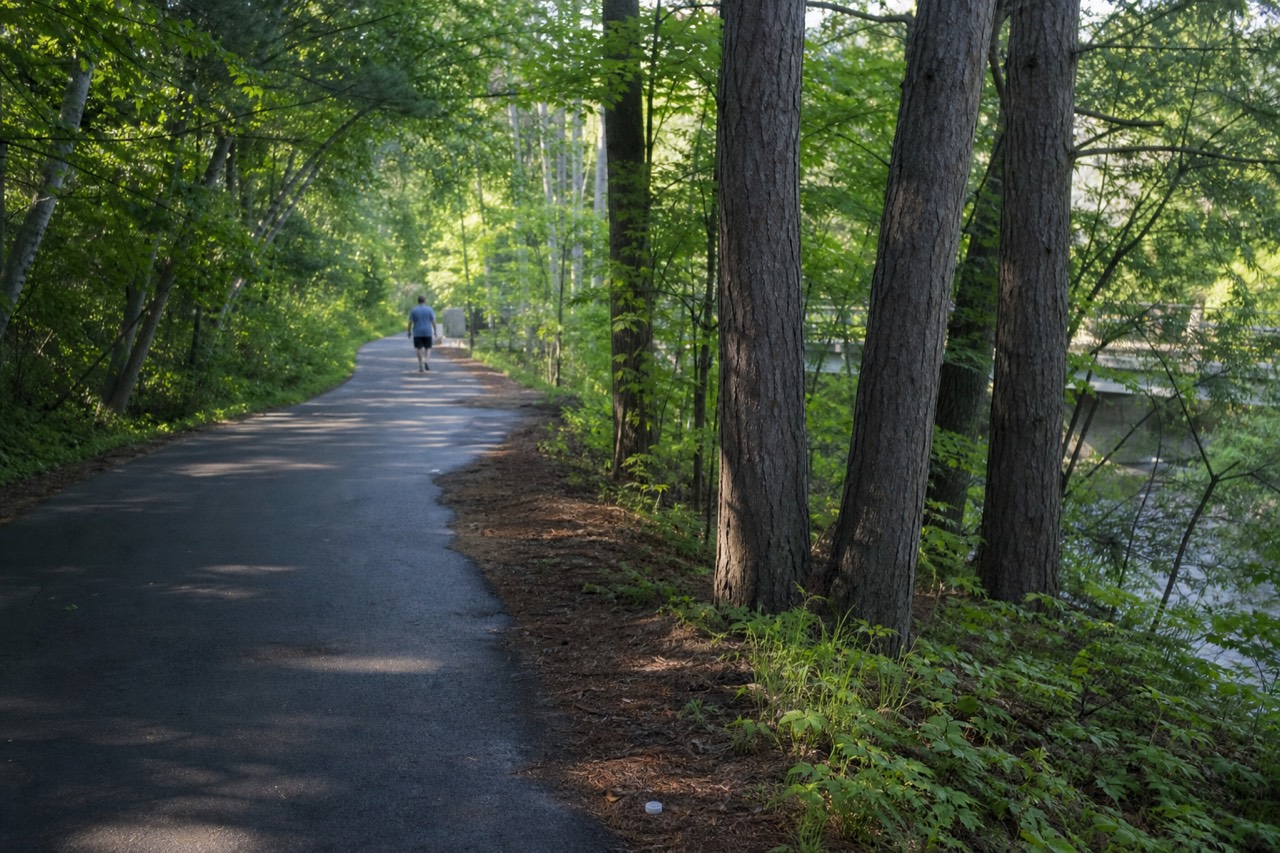
The TART trail network is the other walkable asset. These paved trails thread through Traverse City and out along the bay, and they are popular with walkers, runners and cyclists. They will take you along the water and through neighborhoods, and they connect toward the edges of town, but they do not connect winery to winery, because the wineries are not in town. Treat the TART as a superb walk that happens to start near an urban winery, not as a wine trail.
One downtown development worth knowing: Bonobo Winery, an Old Mission estate run by the Oosterhouse family, has been opening an off-site tasting room and sushi bar in partnership with Dojo Sushi at 115 Franklin Street downtown, with indoor seating for 25 to 30 and outdoor space looking over Grand Traverse Bay. If that room is open when you visit, it meaningfully thickens the walkable downtown wine scene, and it is worth checking before you plan your afternoon around it.
If you want to pair the walkable downtown with a proper wine-country run, one tour is built in exactly that order: it starts at the urban winery in town, then crosses onto the Leelanau Peninsula for the estates.
That combination, a walkable start and a driven finish, is the pattern we recommend most often on Traverse City Wine Tours for visitors who arrive without a car and still want to see real vineyards rather than only downtown rooms.
The Bike Option On Old Mission: The Closest Real Thing
If walking is out but you still want to cover wine country under your own power, the bike tour on Old Mission Peninsula is the honest substitute. It runs four and a half hours, a support vehicle travels along, and the from-price of $199 covers two riders. You pedal the peninsula; someone else carries the bottles.
This is the product that answers the intent behind most "walking wine trail" searches, which is really a desire to experience the wine country actively rather than through a bus window. Old Mission is the right peninsula for it: the terrain is rolling rather than brutal, the water is visible from the road much of the way, and the spine road runs the length of the peninsula past several of the trail's ten wineries. The listing carries only a couple of reviews so far, too few for any star claim, which is worth knowing but not disqualifying for a small private product.
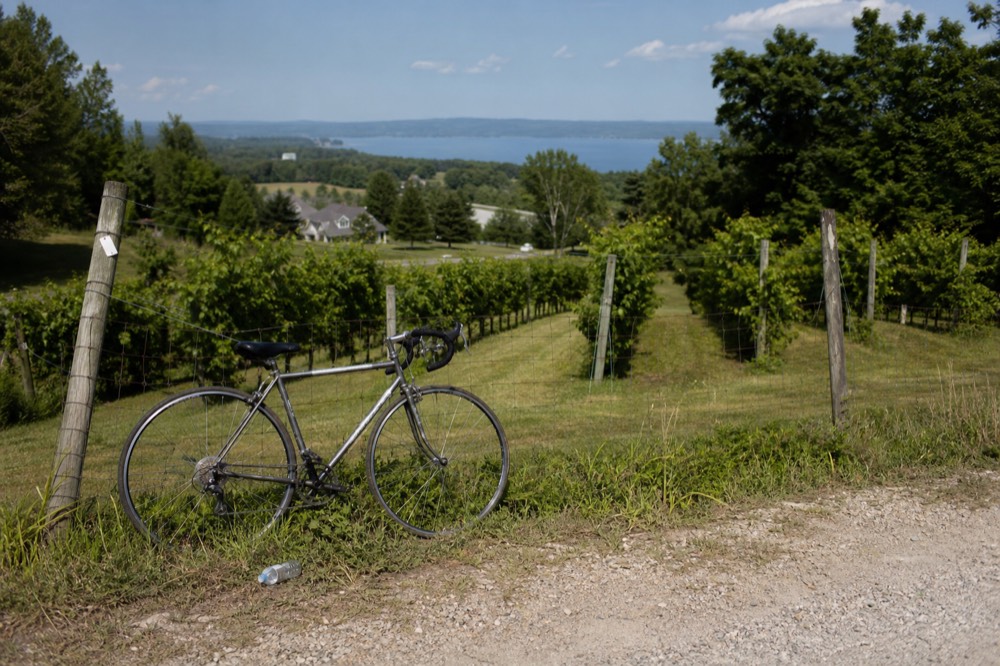
Be realistic about the effort. This is a rural peninsula, not a rail trail, and the distances between estates are the same ones that defeat walkers. Riders who want a gentler version can self-direct a shorter loop; our self-guided wine tour guide covers how to build one stop at a time. And if you would rather someone else handle the logistics entirely, the Old Mission Peninsula wine trail guide walks through the estates and the driving spine in detail.
Getting Between Wineries When Walking And Biking Are Out
For most visitors the practical answer is a tour vehicle or the public bus. Shared shuttle tours run from $79 per person with tasting fees paid at the bar, semi-private SUV tours run from $69 per person with samples included, and BATA, the regional transit authority, runs routes in and out of Traverse City and publishes its own guide to reaching wineries by bus.
The bus point deserves emphasis because almost nobody mentions it. BATA publishes a guide to riding its routes to wineries and beaches, which you can read at bata.net. It is the slow, cheap, honest option for a traveler without a car, with the usual caveats about rural frequencies and seasonal schedules. It is a bus, not a walking trail, but it gets you there.
| Option | Format | From-price | What the fare covers |
|---|---|---|---|
| Shared shuttle, Old Mission or Leelanau | Scheduled shuttle, up to 20 | From $79 per person | Transport only; tastings paid at each winery |
| Semi-private SUV tour | SUV, up to 24 | From $69 per person | Samples plus a complimentary bottle; flights and food extra |
| Bike and wine tour, Old Mission | Private, up to 2 riders | From $199 per group | The ride and support vehicle; tastings arranged at the stops |
| Designated driver service | Your own car, private | From $369 per group | Five hours of driving for the whole group; every pour paid at the bar |
| BATA public bus | Fixed-route transit | Published fares on its site | The ride only |
The fee structure in that table is the single most useful thing to understand about this market, and almost no other page publishes it. Two operators dominate: one runs scheduled shuttles where the ticket is transport only and you pay $5 to $10 per tasting on Old Mission or $5 to $15 on Leelanau at the bar, and the other runs SUVs where samples and a take-home bottle are in the fare. The designated-driver service is a third animal entirely: a hired driver at the wheel of your own car, which changes the legal picture, because the open-container exception for chartered vehicles does not extend to a passenger area you brought yourself. Our wine tour transport guide unpacks that distinction, and the wine tour prices guide does the arithmetic per person.
If your group would rather split one vehicle and one bill, this is the private format that replaces a walking trail for a party that wants its own schedule.
When To Go, And How The Walkable Parts Feel By Season
Downtown Traverse City and the TART trail are pleasant from late spring through October, and October is both the best and the busiest month: harvest runs mid-to-late September through October, tasting rooms peak in October, and fall colour typically arrives early to mid October, with the peninsulas holding colour later than inland areas because the bay moderates the air.
That colour detail comes from Traverse City Tourism's own colour-tour guidance, and it matters for this page specifically: the peninsulas lingering green-and-gold into late October is the same lake-moderation effect that lets grapes ripen this far north, as the region's tourism body explains on its Traverse Wine Coast page. If you are walking downtown or cycling Old Mission in October, you are doing it in the region's best light, alongside its biggest crowds.
To make the walkable-versus-not question concrete, here is the honest geography in one place. These are the distances that decide whether your own two feet are an option at each stage of the trip.
| Part of the trip | Walkable? | Why |
|---|---|---|
| Downtown Traverse City core | Yes | Compact grid; urban winery, restaurants and tasting rooms within blocks |
| TART trail network | Yes | Paved trails through town and along the bay; connects neighborhoods, not wineries |
| Old Mission Peninsula wineries | No | Ten trail wineries strung along a roughly 19-mile spine road, miles apart |
| Leelanau Peninsula wineries | No | 23 trail wineries spread across an entire county on rural two-lane roads |
| Between the two peninsulas | No | Separate peninsulas on opposite sides of Grand Traverse Bay, joined only through town |
There is a price signal worth reading too. The federal GSA per diem lodging rate for Traverse City and Grand Traverse County in fiscal 2026 is $134 a night for most months, rising to $235 for July and August. The US government itself budgets 75 percent more for a Traverse City room in high summer than in the shoulder months. If a walkable downtown afternoon plus one wine-country run is your whole itinerary, October through spring buys you the same streets for substantially less money, and winter brings its own scene, including ice wine events, which our winter wine tasting guide covers.
Planning The Honest Version Of The Trip
Build the trip as two halves: a walkable downtown afternoon anchored at the urban winery, and one driven or ridden wine-country run on a single peninsula. Trying to walk the wineries themselves wastes a day on highway shoulders, while splitting the trip this way gets you both the stroll and the estates.
For the second half, pick a peninsula rather than trying both. Old Mission is the compact one, ten trail wineries along a single 19-mile spine, and it suits a bike or a short shuttle tour. Leelanau is the sprawling one, 23 trail wineries across a county, and it rewards a full-day tour or a self-driven loop; the Leelanau Peninsula wine trail guide and our Old Mission versus Leelanau comparison lay out the trade-offs. Whichever you choose, book the driven half ahead: October fills the shuttles, and the operators arrange appointments at the wineries rather than guaranteeing full reservations, so the earlier you lock a seat, the smoother the run.
Here again are the three products that best replace the walking wine trail this region does not have.
No formal walking wine trail exists anywhere in Michigan's wine country, so the questions below answer the practical substitutes: what is walkable in town, what the bike option covers, how to reach the estates without a car, and when to time the whole trip.
Common Questions About Walking Wine Trails In Michigan
Where Can I Find Walking Wine Trails In Michigan?
Nowhere in the Traverse City wine region, honestly. The wineries sit along a 19-mile peninsula spine and across an entire county, miles apart on rural roads. The walkable substitute is downtown Traverse City around the urban winery, plus the TART trail network, with a bike tour on Old Mission as the closest active option for the estates themselves.
Can you walk between wineries on Old Mission Peninsula?
Not realistically. The peninsula runs about 19 miles from Traverse City to the lighthouse, is never more than three miles wide, and its ten trail wineries sit along the spine road with real gaps between them. It is a driving or cycling peninsula, not a walking one.
Is downtown Traverse City walkable for wine tasting?
Yes, and it is the one genuinely walkable part of the region. Left Foot Charley operates as an urban winery in the city, the downtown core is compact, and a Bonobo off-site tasting room with a sushi bar has been opening on Franklin Street. Pair it with the TART trail for a walk along the water.
What is the closest thing to an active wine tour near Traverse City?
The bike and wine tour on Old Mission Peninsula. It runs four and a half hours for up to two riders from $199 per group, with a support vehicle along, so you pedal the peninsula while someone carries the bottles.
Can I reach Traverse City wineries without a car?
Yes, with planning. Tour shuttles run from $79 per person, semi-private SUV tours from $69 per person with samples included, and BATA, the regional transit authority, publishes its own guide to reaching wineries and beaches by bus.
When is the best month to walk downtown and tour the peninsulas?
October, if you accept the crowds. Harvest runs mid-to-late September through October, tasting rooms peak in October, and fall colour typically arrives early to mid October, with the peninsulas holding colour later than inland areas. Shoulder months cost less: the GSA per diem lodging rate for Traverse City is $134 a night for most months versus $235 in July and August.